
Making Disciplemakers: Noticing, Engaging, Stepping Forward
By Cailey Morgan
May 28 marked the end of CBWC Church Planting team’s second Making Disciplemakers Cohort.
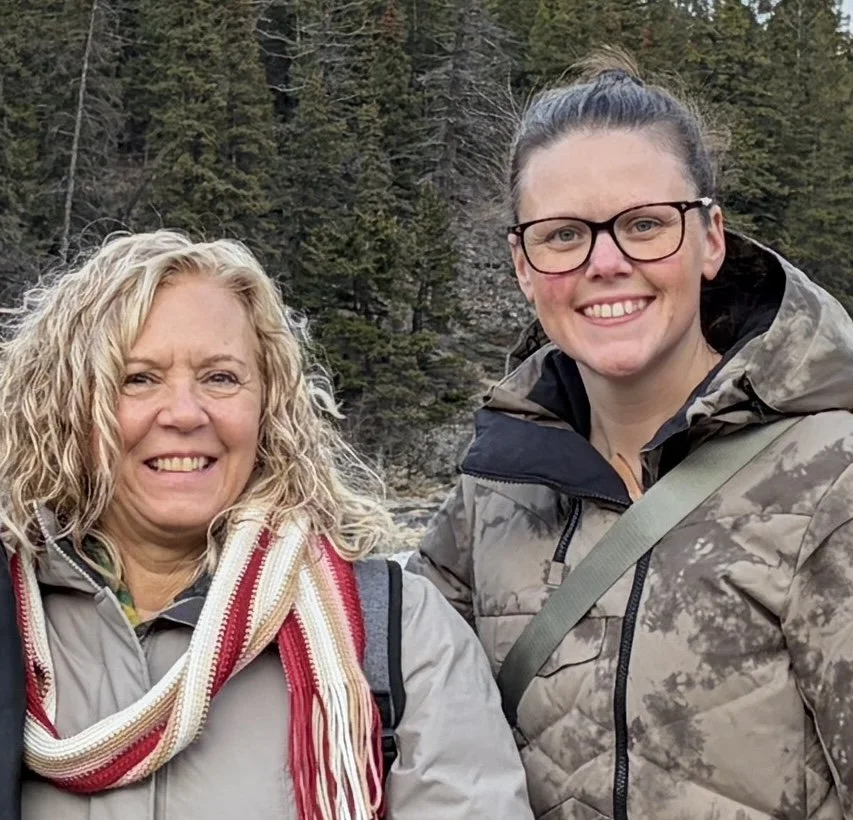
Both Shannon Youell and I were profoundly grateful for the opportunity to learn alongside thoughtful pastors, engaged leaders, and wise laypeople from across the CBWC as we all wrestled with what Jesus taught about discipleship and disciple-making, what it means for our churches now, and how to get started.
Noticing
Along with Jesus’ teachings and the examples of the early church, we discussed four books in our time together: Brad Brisco’s ReThink, Eun Strawser’ s Centering Discipleship, Matt Lake’s Crossing the Discipleship Chasm and Randy D. Reese and Robert Loane’s Deep Mentoring. If you’re looking for a recommendation on something to add to your summer reading that might relate to your situation, give me a shout at cmorgan@cbwc.ca. I’d love to hear your story!
The books, the Scripture meditations, and the conversations acted as mirrors as we began to notice the barriers keeping us and our churches from meaningful movement forward in discipleship and mission.
We noticed that some of us aren’t being discipled nor mentored, and don’t know where to begin. Before asking “How do I become a disciple-maker?” we discovered that we first needed to ask the question, “Am I a disciple?”
We noticed that fear, misplaced priorities, preferences to not share our lives with others, being bombarded with too much information these days (especially information that may not be trustworthy), and even some church systems and programs are all factors that might get in the way of disciplemaking.
Engaging
So how do we approach disciplemaking in this context? After noticing the current situation in our hearts and in our churches, we began to explore and challenge our assumptions. Here are some of the conversations that emerged:
When does disciple-making end and discipleship begin? How do we journey side-by-side with those who don’t know Christ yet, without “falling off the wagon” in our own sanctification journeys?
Can I be a disciple without a community?
What is missional impact? How do we set up our life together in such a way that we can have apostolic-type people leading the way, showing us, while drawing all into an invitation to participate?
How can we reframe conflict as an opportunity for discipleship rather than shying away from awkward conversations or focusing on solving problems right away?
Are we open to realizing that our assumptions might be the barrier preventing neighbours from taking steps forward in discipleship? Some participants noted that they had trouble relating what they learned in church to the context of witnessing to their friends—and one noted that most Christians are indistinct from non-Christians other than Sunday worship attendance. There are many non-Christians who are far more virtuous than me. What is the difference Jesus is making in my life?
How do we measure growth in our churches? Is church attendance an accurate mark of a person’s spiritual development? What else do we need to pay attention to?
One great discussion centered on what discipleship we saw actually happening in our congregations. It helps us broaden our understanding of discipleship beyond our focus on the pulpit and small groups, to also include the Deuteronomy 6 “along the way,” life-on-life experiences that shape us as people: walking through hard times together, eating together, praying and engaging shared disciplines, practicing mercy and care for our neighbours, and reminding one another of Christ's Word and His Way in the midst of circumstances.
Stepping Forward
In one session, a participant said to us, “I’m concerned about church renewal, and I’m recognizing that renewal starts in my own heart.” If you’re in the same boat as this pastor, but aren’t sure where to start, we’d recommend taking a look at the Centre for Missional Leadership’s 9-month program, “Forming Churches that are Spiritually Alive in the Neighbourhood.”
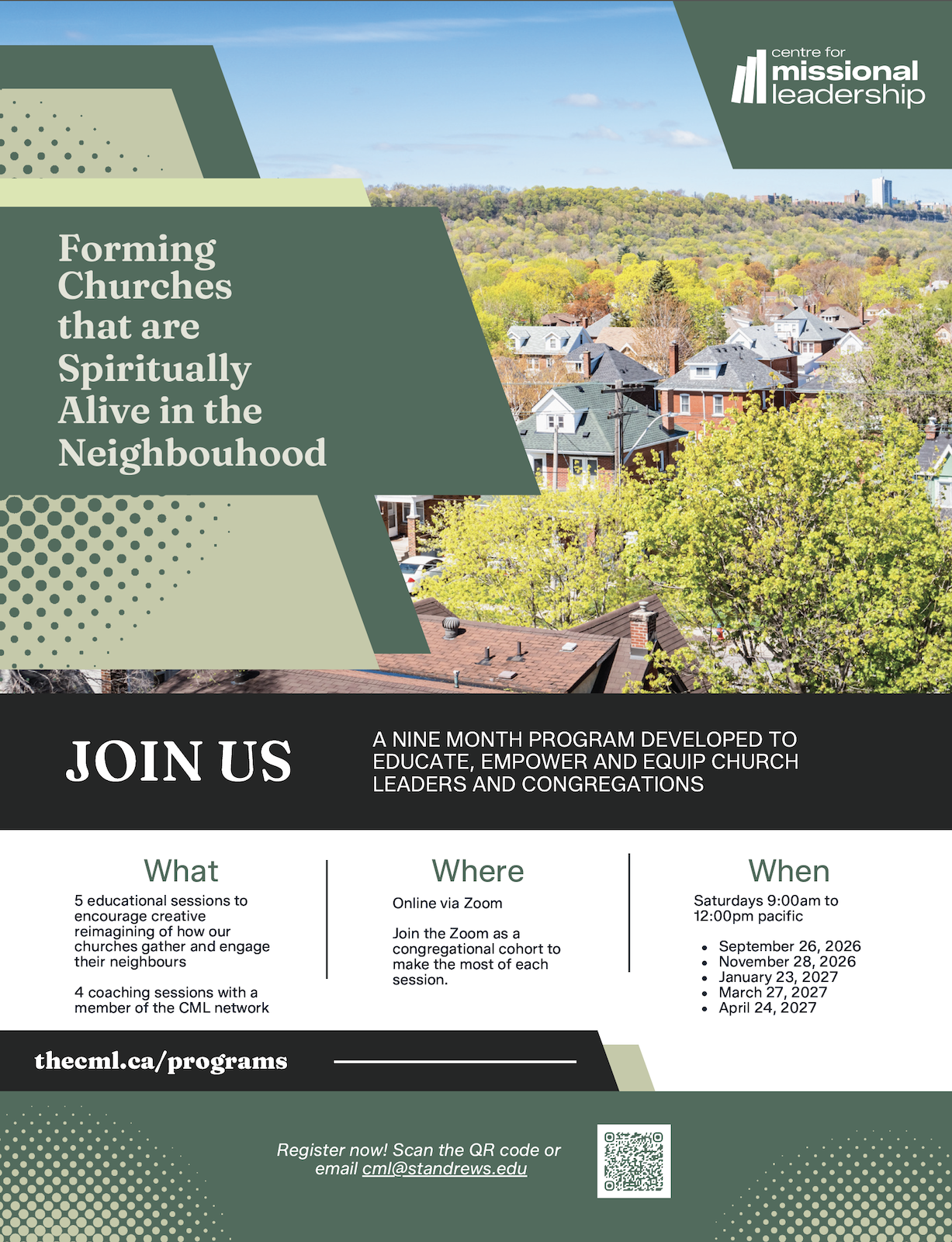
This practical online course is set up to be taken as a team of several people. Five educational sessions begin with exploration of your current context, then bring in theological reflection and potential next steps.
Your team is also paired with a coach who will take you through 4 coaching sessions to help contextualize the education and provide another voice to team discussion about possible next steps. We hope to provide you with CBWC coaches.
The course runs September to April and costs $400 per team of 3-10 people. We think this course would be a great “Step 2” for churches who have participated in the Making Disciple-Makers Cohort with us, but see also see a lot of value for any of our churches looking to be empowered and equipped in reimagining how your congregation gathers and engages your neighbourhood.
