
Board Bytes
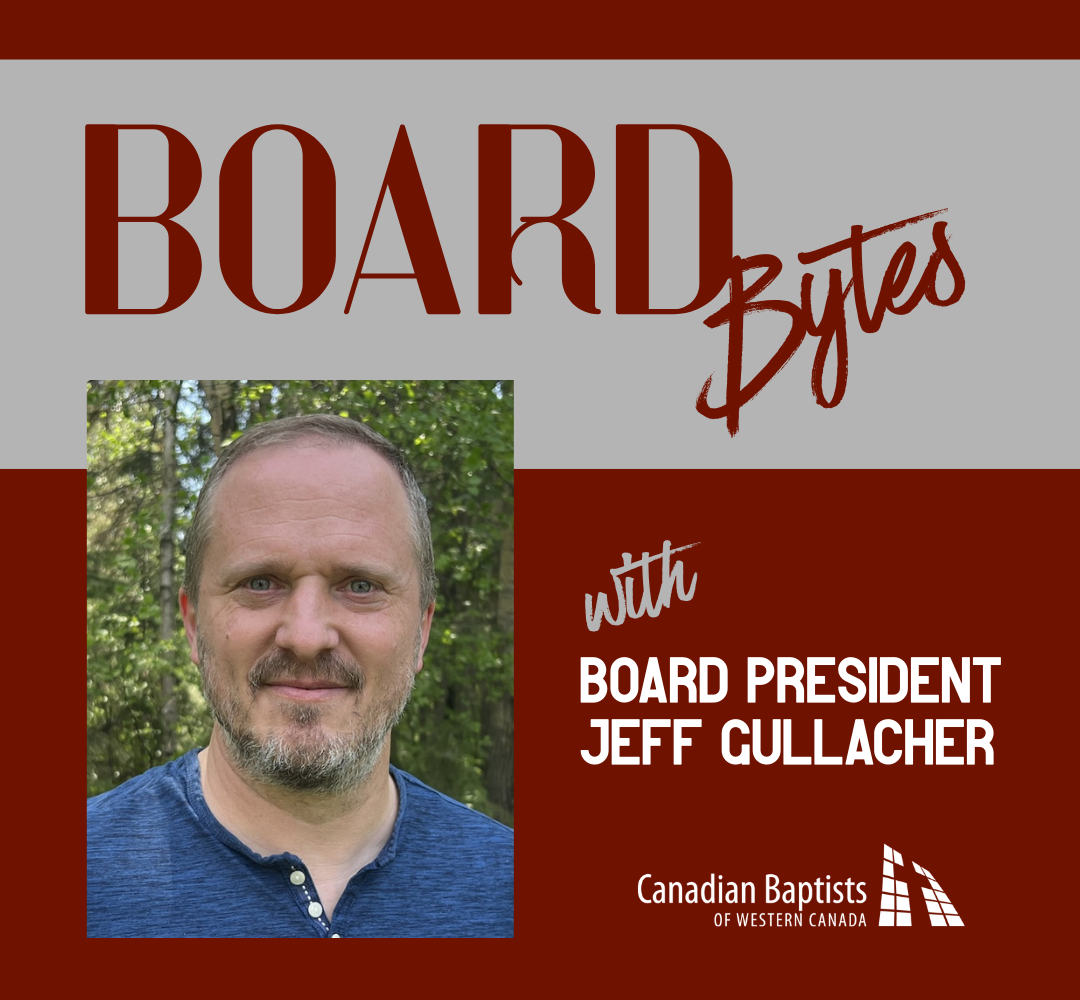
Welcome to this new feature in our newsletters that gives our CBWC family a little more insight into the work of the CBWC Board. Though some of the Board’s work is either too mundane or sensitive to report in these newsletters, you can anticipate hearing updates of our work many times throughout the year.
The CBWC Board met online in late January, saving us from unpredictable winter travel. At that meeting, we approved changes to the Ministerial Protocol Manual (MPM) to recommend at the CBWC’s 2026 online Annual Business Meeting. We also heard an
extended report from the President and the Board Chair of Carey and received our usual variety of reports from ministry partners and others.
In February, our board called a special meeting to accomplish a special task: voting to extend a call to our new Executive Minister! We give thanks to God for the good news that Rev. Dr. Clint Mix will begin his ministry among us on May 1, 2026, allowing some valuable overlap with Rob Ogilvie. Many thanks to those involved in the search committee for their extensive work.
Our next CBWC board meetings will occur at the Calgary office in late April. Among other things, the board will be preparing to recommend various business items for the 2026 online Annual Business Meeting. It will also be our last board meeting with Rob Ogilvie, whom we will honour for his faithful work among us.
Our board covets your prayers as we seek to govern wisely in the matters you have entrusted us with.

Rv. Dr. Clint Mix
Getting Active to Address Food Insecurity
By the Justice & Mercy Network
Active in Mission 2026 kicks off May 1, and we hope that you and your church will join us.
Here’s how it works: Canadian Baptists across the country sign up as individuals or teams to get “Active In Mission,” choosing an activity or exercise to raise funds to combat hunger. Those funds raised over the summer are then shared between CBM, CBWC, and our partner denominations across Canada, to support local ministries address food insecurity. For example, the 11 grants mentioned below were dispersed using CBWC’s portion of the 2025 AiM funding.
Get Your Church Active in Mission!
The great thing about AiM is that anyone of any age can participate in an activity that is accessible to them. It’s so easy to invite friends, neighbours, or small groups to join in the fun.
Talk to your church about Active in Mission this year, and watch for more details and resources coming May 1—including new materials to help our kids and families get involved.

Most Recent Active in Mission Grant Recipients
We are thrilled to announce that, from the money raised at Active in Mission 2025, we were able to offer grants to 11 of the applicant churches:
- Berea Baptist Church, Surrey
- Calvary Baptist Church, Fort St. John
- Calvary Baptist Church, Gibsons
- Community Baptist Church, Swift Current
- First Baptist Church, Vernon
- First Baptist Church, Prince Albert
- First Baptist Church, Saskatoon
- Gateway Baptist Church, Victoria
- The Neighbourhood Church, Burnaby
- Pilgrim Baptist Church, Winnipeg
- Ward Memorial Baptist Church, Vancouver
These churches address food security through programs like community pantries, garden initiatives, food education programs, seniors’ hospitality, and outreaches offering support to their underhoused neighbours.
More than a Table: Your Chance to Connect
Are you noticing the impact of rising food costs in your community? More and more families, seniors, and neighbours are feeling the strain, and many of our churches are responding in creative and compassionate ways. Did you know that this is an area that Canadian Baptists have been active in since the 1800s?
If your church is already involved in addressing food insecurity, is exploring ways to respond, or has received an Active in Mission grant to support this kind of ministry, the Justice and Mercy Network invites you to join a conversation with others doing similar work to resource one another and share best practices.
On Monday, April 27 at 6:00 PM PST, we’re hosting a one-hour Zoom gathering. The gathering is called More Than a Table: Learning to Love our Neighbours in the Food Security Space.
Together we’ll explore initiatives such as:
- cooking-together classes
- community meals
- seniors’ luncheons
- food pantries and food rescue
- community gardens and neighbourhood partnerships
You’ll have time in small conversation groups to exchange ideas, learn from one another, and imagine what might be possible in your own context. We will also hear from Louise Hannem from CBM about this year’s Active in Mission fundraiser.
We hope you’ll join us for this encouraging hour of learning, connection, and shared imagination. Email heartland@cbwc.ca to request the Zoom link.
Partner Spotlight: HopeHill
Why Did Jesus Listen?
By Sam Nakai
CEO, Hopehill: Living in Community

Jesus spent a surprising amount of time listening to people. We often assume He listened because others needed to be heard. After all, He had all the answers. People came to Him because they needed something from Him. But lately I have found myself wondering about something we may rarely think about.
What did it feel like for Jesus to listen?
When we read the Gospels, we notice how deliberately Jesus listened to people. In Luke 24, on the road to Emmaus, He asks two disciples what they are discussing and then walks with them as they speak about their disappointment. In John 4, He sits with the Samaritan woman at the well and allows her to speak about her life and her questions. In both moments, Jesus makes space to hear people.
I wonder whether giving time to people and listening to them was itself a blessing for Jesus. Did He feel joy hearing someone talk about their day? Did He feel gratitude when someone opened their heart in honest conversation? Did He notice the quiet beauty of ordinary lives unfolding in front of Him?
Scripture does not answer these questions directly. Perhaps that silence is intentional. It invites us to discover for ourselves the quiet blessing that can be found in listening.
In the Kingdom of God, the way blessing flows can sometimes surprise us. Often it is exactly what we would expect. The strong help the weak. The teacher instructs the student. The one with resources gives to the one in need. But Jesus also shows us that the flow of blessing does not move in only one direction. Sometimes the one who appears to receive becomes the one who gives.
The Kingdom of God often turns our assumptions upside down.
Perhaps listening is another expression of the upside-down Kingdom Jesus so often described. We often think that when we listen to someone who is lonely, elderly, struggling, or overlooked, we are the ones offering something to them. But many times, the opposite happens.
The listener receives the greater blessing.
I have been thinking about this a lot during my first few months at Hopehill, CBWC’s ministry that provides affordable housing for seniors in Vancouver. One of the quiet privileges of these early months has been sitting with residents and simply listening to their stories.
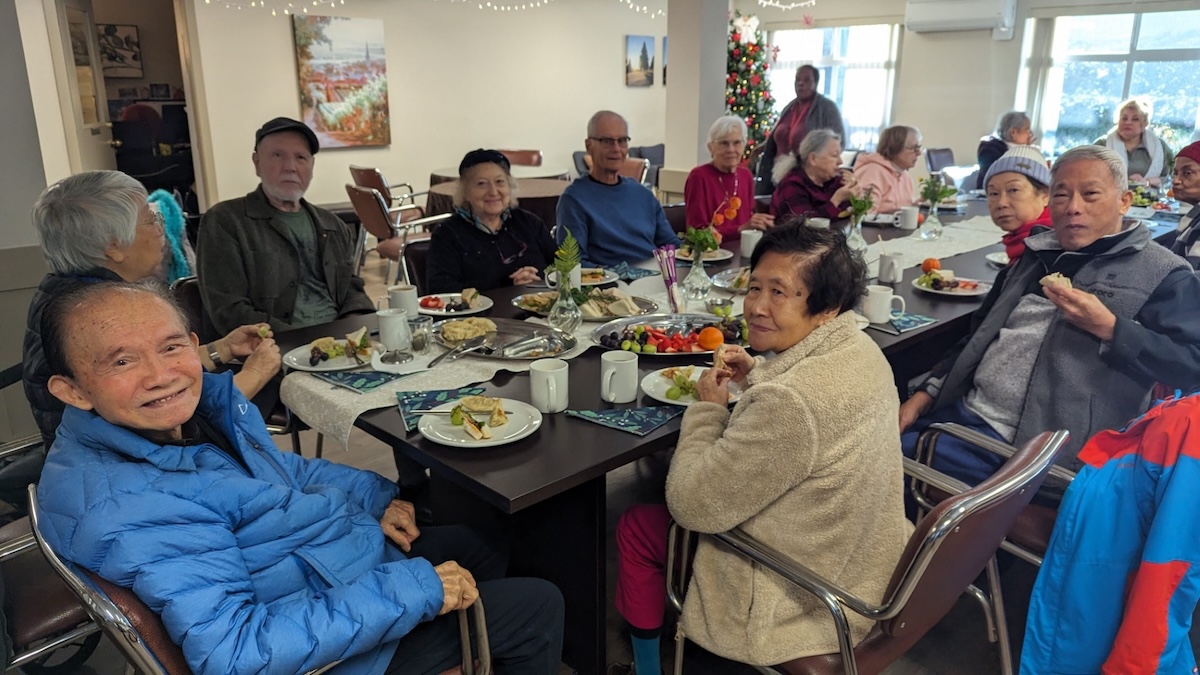
If you spend time with seniors, stories come easily. Memories from childhood. Stories from work. The names of people they loved. Moments that shaped their lives. Sometimes the stories wander. Sometimes they repeat. Sometimes they repeat every time you talk with them. But behind every story is a life that has been lived. And something unexpected happens when you take the time to listen.
The person speaking may feel heard. That is certainly meaningful. But very often, the deeper gift is given to the listener.
True listening has a way of lifting our hearts. It pulls us away from ourselves. It gently guides us toward humility, grace, and a quiet recognition of the value of the soul sitting across from us. It reminds us who they are before God.
The listener receives.
If life ever begins to feel rushed or heavy, I would offer a simple invitation. Come spend an afternoon at Hopehill. This is a real invitation, not simply the closing line of an article. It is a genuine invitation to come and discover the heart of listening.
Our residents are usually easy to spot. Some are out for a walk. Some are sitting in the lobby. Some are gathered outside for a smoke and a conversation. Sit down. Ask a question. Listen to a story.
You may arrive thinking you are doing something kind for someone else. But you will likely leave realizing that you were the one who received something far greater.
And perhaps, in moments like these, we begin to appreciate a little more why Jesus so often stopped and listened to people.
Hopehill Living in Community Society is a ministry of the CBWC providing 350 affordable units to live in Vancouver for seniors, many of whom live on less than $2000 per month.
We are currently $170,000 away from completing a $520,000 matching gift campaign with the Jim Pattison Foundation before May 31, 2026. These gifts help create places where seniors are known, heard, and cared for in community.
If, as you read this reflection, you sense God prompting you to support this work, we would consider it a privilege to steward your gift. Please click on this link for more information: https://hopehill.ca/donate/
Not Improving on Our Instructions
With Pastor Ed Neufeld
Ed’s Book Release in March
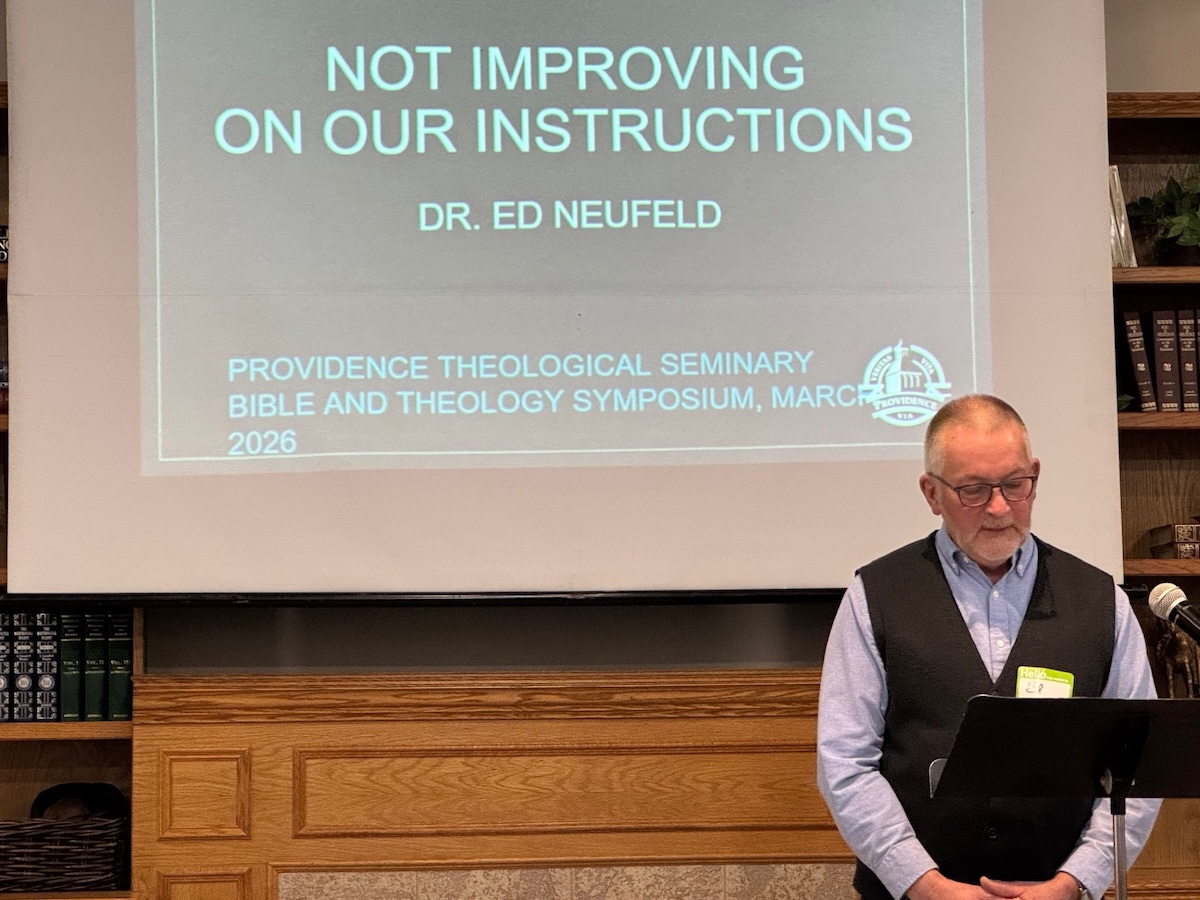
Congratulations to Pastor Ed Neufeld, from Kleefield Community Church in Kleefield, MB, on the release of his book Not Improving on Our Instructions. Ed has been an active part of the Theology for the Ordinary group within the CBWC for the last several years. This book is a direct result of the podcast with the same name, in which Ed and Mark Doerksen unpack themes related to the early church and our mission as the church today.
When asked what his book is about, Ed had this to say:
This book asks one question and gives one answer. Question: based on the New Testament, what is the main thing God wants churches to do? In different words, what should churches concentrate on? What is God’s priority for believing congregations? Answer: God wants us to love each other. He wants us to take care of each other, forgive each other, and serve each other. He wants us to live with each other the way we’ll live together after the Lord returns.
Has this ever actually happened? Have believers lived together this way?
The closest the New Testament gets to this is the life together of the 3,000 at the end of Acts 2. Those six verses give us the New Testament’s ideal church. It’s entirely about their life together. I am not sure it has happened like that since then.
What persuaded you that loving one another was the church’s first priority?
Thirty years ago, my friend Ron Shiels preached through 1 John. He told me that loving each other was the most important thing for believers to do. I didn’t know if he was right or not. I decided to look at the New Testament Letters, because they were written directly to the churches. If Ron was right, I’d find it in the Letters. In Paul, Hebrews, James, Peter, and John, I found regular emphasis on our life together.
That’s the first half of what convinced me. The other half is what the New Testament Letters did not say.
So, what do the Letters not say?
The Letters don’t call congregations to outreach, to evangelism, to sharing the gospel, or to inviting unbelievers to church. It’s hard to believe, isn’t it? The Letters don’t call believers to meet the needs of unbelievers around them, or to improve society.
Every New Testament church had big social problems in their own city: violence, injustice, abuse, poverty, oppression, neglect, and so on. All this was in every city in the Roman empire. But the Letters do not tell churches to make the rest of their city a better place.
When these problems happened in the church, the Letter writers were scathing. Such things must not happen among the brothers and sisters. But the writers didn’t seem to have much interest in improving the surrounding city. This silence affected me deeply. That’s the second half of what convinced me that “love one another” was the most important thing.
While I’m on the silence in the Letters, they never mention size; if a church is small or large or growing or shrinking. It never comes up. No church was commended or corrected for such things. We don’t even know which churches were which. Numbers were irrelevant.
So, back to outreach: are you telling us to ignore the needs of unbelievers right around us? Is God telling us to walk past our neighbours in trouble?
No, no, I’m not saying that. Remember the question at the start: what is the main thing God wants? What should we concentrate on? What is God’s priority for congregations? Not Improving on Our Instructions is not about all the things God tells us to do; it is about the one thing God says is most important. Paul writes, As you have opportunity, do good to all, especially to the household of faith.” In another place he says, “Always pursue what is good with one another and with everyone.” “May your love abound for one another and for everyone else.” We do good to all. The congregational life of love spills over. But the centre is one another, not everyone else.
What made you decide to write a book?
I wrote because I could not find anyone saying what seemed to me such an obvious thing. I wrote because I listened to leaders who had such different views of what churches should do. Some thought that loving each other could not possibly be enough. Surely, we should do more. That’s why this is called, Not Improving on Our Instructions. What would our churches look like if we did not improve on our instructions? What if we just did what they said?”
Who are you writing for?
This is a lay-level book; there is no technical academic language except in a few endnotes. It’s not really a popular book either, though. It doesn’t have heart-warming stories or anecdotes. It’s mostly Bible exposition. I’m not sure that was ever popular.
My reader needs to be asking two questions: ‘What should churches do?’ And ‘What does the Bible say?’ I have in mind all levels of local church leaders, pastors and lay leaders, as well as anyone in parachurch ministry. There are study questions on each sermon at the end, for group study. I wish I’d had this text when I was a Bible college student.
Why did you write a book of sermons rather than a book of chapters?
You want the truth? I don’t know how to write a book. I am not that good. I wrote a thesis with chapters and a dissertation with chapters, and those went alright, but when I tried to write a book about these things, it flopped. My efforts did not please anyone else, and they didn’t please me either. So, I started over. On the suggestion of my brother Les and my friend Mark, I wrote a book of sermons. I have used all of these sermons in my home church, pretty much as you will read them.
I have to talk about Marilyn here, my wife. She edited all these sermons ruthlessly, and then she went through them all again. She didn’t change the content, but she reorganized it and clarified and cut out repetitions. Marilyn made these a lot more readable.”
You lead a church in Kleefeld, MB. How has your church responded to this?
Our church has been great. I taught these things as I was learning them. We went over the Scriptures together, and the people were all in. They took it and ran with it. I asked the other elders if I could make working on this book a part of my pastoral duties, and with no hesitation they said yes. This book is self-published, which takes money, and our church paid sizeable piece of the publishing cost because they want to share what they’ve learned.
Sometimes we’re a shining example of this message, and at other times we fail miserably. But we hang on to the God who works in us to will and to do what pleases Him.
If you’d like to engage in this topic more, please check out the podcast ‘Not Improving on Our Instructions’. Ed has also directed us to his website https://www.notimprovingonourinstructions.ca/
Copyright © 2026 Canadian Baptists of Western Canada, All rights reserved.
Making Connections is the monthly newsletter of the CBWC.